
双工应用中的光纤极性基础知识
2025 年 11 月 12 日 / 通用,101 学习,最佳实践
Fiber polarity is the direction that light signals travel from one end of a fiber optic cable (link) to the other. A link’s transmit signal (Tx) must match its corresponding receiver (Rx) at the other end. Although it may seem obvious, fiber optic polarity is a frequent source of confusion and installation errors. Let’s break down the essential basics for duplex applications.
|
|

End-to-End Duplex Polarity
In end-to-end duplex fiber applications, two fibers provide bidirectional data transmission. Each fiber connects the transmitter on one end to the receiver on the other. Polarity maintains this connection.
In a duplex channel, Tx should always connect to Rx, regardless of the number of patch panel adapters or cable segments in the channel. If you do not maintain polarity — by connecting Tx to Tx, for example — data flow stops.
The TIA-568.3-E standard recommends an A-B polarity scenario for duplex patch cords to maintain proper polarity. An A-B duplex patch cord provides a straight-through connection that maintains the A-B polarity in a duplex channel. Fiber connectors also use a key to maintain the correct Tx and Rx position and prevent the fiber from rotating when you’re mating the connectors.
|
In duplex fiber applications, the Tx (B) should always connect to the Rx (A), regardless of how many patch panel adapters or cable segments are in the channel. |

Array-Based Duplex Polarity
Duplex polarity becomes significantly more complex when using multi-fiber MPO-type trunk cables. Industry standards originally called out three different polarity types for array-based duplex applications — A, B, and C — each with its own disadvantage. The 2022 TIA-563.3-E standard introduced two new “universal” fiber polarity methods, U1 and U2, to help simplify array-based duplex applications and provide support for future applications.
Method A
Method A uses Type A straight-through MPO trunk cables with a key-up connector on one end and a key-down connector on the other end. With a Type A trunk cable, the fiber in Position 1 (Tx) arrives at Position 1 (Tx) at the other end.
|
Method A uses Type A straight-through MPO trunk cables. |

Method A for duplex signals uses cassettes with Type A fiber transition and Type A adapters. It requires a transceiver-receiver flip from Position 1 (Tx) to Position 2 (Rx), Position 3 (Tx) to Position 4 (Rx), and so on. Non-standard A-A duplex patch cords on one end of the channel achieve this flip. Using two different patch cords at either end increases operational complexity — it can cause confusion at patching areas and requires maintaining inventories of both patch cords.
|
Method A supporting duplex signals uses a Type A MPO trunk cable and requires non-standard A-A duplex patch cords at one end of the link. |

Method B
Method B uses Type B reversed MPO trunk cables with key-up connectors on both ends, so that the fiber located in Position 1 (Tx) arrives at Position 12 (Rx) at the other end.
|
Method B uses Type B straight-through MPO trunk cables. |

Method B for duplex signals uses cassettes with Type A fiber transition and Type B adapters. It lets you use A-B patch cords on both ends for equipment connections. While this eliminates confusion at patching areas, Method B typically requires inverting one of the cassettes. This can make connection numbering confusing and require special labeling. Some manufacturers require two different cassettes for Method B at either end of the channel to avoid this situation.
|
Method B supporting duplex signals uses a Type A MPO trunk cable with A-B duplex patch cords at both ends of the link but can require an inverted cassette at one end or two different types of cassettes. |

Method C
Method C uses Type C trunk cables with a key-up connector on one end and a key-down on the other end. Type C trunk cables feature an internal flip that flips each pair of fibers so that the fiber in Position 1 (Tx) arrives at Position 2 (Rx) at the opposite end, and the fiber in Position 2 (Rx) arrives at Position 1 (Tx).
|
Method C uses Type C flipped MPO trunk cables. |

Method C for duplex signals uses cassettes with Type A fiber transition and Type A adapters. It lets you use A-B patch cords on both ends for equipment connections.
Method C works exceptionally well for duplex applications because the cable handles the flip. However, Type C trunk cables do not readily support parallel 8-fiber applications, which transmit from Positions 1, 2, 3, and 4 of the MPO interface and receive on Positions 9, 10, 11, and 12. While users can support parallel optics using Type C MPO assemblies at one end of the channel to reverse the flip, industry standards do not recommend Type C due to operational complexity.
|
Method C supporting duplex signals uses a Type C MPO trunk cable with A-B duplex patch cords at both ends of the link. |

Methods U1 and U2
Newer universal Methods U1 and U2 use Type B trunk cables and A-B patch cords. These methods offer the advantages of maintaining the same orientation of both cassettes and using the same type of patch cords on both ends.
Method U1 uses cassettes with Type U1 fiber transition and Type A adapters, where the fiber in Position 12 transitions to Position 2, the fiber in Position 11 transitions to Position 4, and so on.
|
Method U1 supporting duplex signals uses a Type B MPO trunk cable with A-B duplex patch cords at both ends of the link. |

Method U2 uses cassettes with Type U1 fiber transition and Type B adapters, where the fiber in Position 12 transitions to Position 1, the fiber in Position 11 transitions to Position 3, and so on.
|
Method U2 supporting duplex signals uses a Type B MPO trunk cable with A-B duplex patch cords at both ends of the link. |

Both methods U1 and U2 support transitioning to parallel optics. Method U2 also supports direct breakout applications where a high-speed parallel optic switch port connects to multiple lower-speed duplex ports, such as leveraging an 8-fiber 400 Gig switch port to connect four duplex 100 Gig servers (4X100). Using Method U1 for direct breakout applications requires non-standard A-A duplex patch cords.
The table below summarizes the components supporting array-based duplex signals.
|
|

Key Considerations for Choosing a Polarity Scheme
With TIA standards adopting five mutually incompatible polarity schemes for array-based duplex applications, selecting the appropriate scheme can be challenging. No matter what method you choose, maintain consistency throughout the channel — you can’t mix and match components from different methods.
When choosing a method, consider operational complexity as well, such as the need for different cassettes and patch cords at either end of the channel. Future migration paths should also be part of your polarity strategy. Choosing a method that supports transitioning to parallel optics or breakout applications helps avoid future complexity and costly component replacements.
It’s also vital to understand the end face angles used by your polarity scheme. For example, the key-up to key-up approach in Method B is not suitable for MPO connectors that feature angled physical contact (APC) end faces. This creates physical incompatibility that prevents the 8-degree angles from mating correctly. While all single-mode MPO connectors feature APC end faces, multimode MPO connectors with APC end faces are becoming the norm for high-speed 400 and 800 Gig applications.
The TIA Engineering Committee TR-42, which develops TIA-568 standards, clarified and simplified polarity in the 568.3-E standard revision, including use of symbols to identify the various components of each polarity method.
How to Check Duplex Polarity
Ensuring proper duplex polarity, where the transmit signal matches its corresponding receiver, is essential for fiber links to function. However, it can be easy to confuse the transmit and receive sides of a duplex connection — you can’t always tell which side is which, especially when you can’t see both ends of the link at once.
重要须知: Never look directly into the port to try to determine which fiber is transmitting; it’s potentially dangerous to your eyes, and you can’t see the light anyway.
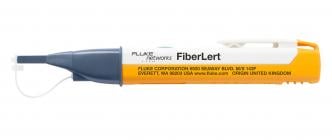
You can save a lot of time and guesswork by determining which side of a port is active and then connecting it properly. The video below shows a quick and simple way to verify duplex polarity using the FiberLert™ Live Fiber Detector.
|
Which side is live? 停止猜测。Determine the polarity of duplex fiber connections instantly with FiberLert. Simply place it in front of the fiber end face or port, and a light and tone will indicate an active fiber. |
Note that regardless of whether you’re deploying an end-to-end duplex channel or an array-based duplex channel that uses MPO trunk cables, you only need to check the polarity of the link at the duplex ports where your active equipment connects. Remember to inspect (and clean, if necessary) the MPOs you use in your duplex channel before connecting trunk cables and cassettes.
继续学习
- • 获取我们的最新电子书:当今数据中心的光纤测试最佳实践
- • Why FiberLert Is a Game Changer in Fiber Optics
- • 数据中心布线
- • 查看我们的光纤测试仪、工具和故障排查指南
最新报道 查看全部 >
双工应用中的光纤极性基础知识
2025-11-12
光缆认证测试:你真正需要关注的指标只有损耗、长度、极性(有时还包括反射)
2025-09-08
什么是 PoE 协商?
2025-06-30
网络和线缆测试终极指南
2025-05-29
Wi-Fi 7 与Wi-Fi 6:新增功能及其对您的网络的意义
2024-11-25
更多大众报道 查看全部 >
双工应用中的光纤极性基础知识
2025-11-12
短距离单模数据中心应用:反射率成为关注焦点
2025-10-15
在 AI 数据中心环境中部署超高密度 400 和 800 千兆网络
2025-10-06
光缆认证测试:你真正需要关注的指标只有损耗、长度、极性(有时还包括反射)
2025-09-08
每位 IT 专业人员的工具包中都应配备 LinkIQ™ 测试仪的 5 大原因
2025-08-19
VSFF 应用的新解决方案
2025-08-12





©2006-2021 Fluke Corporation。保留所有权利。
RM2011, 20/F, SCITECH Tower, 22 Jianguomenwai Avenue, Chaoyang District, Beijing, China
地址:北京市朝阳区建国门外大街22号赛特大厦20层2011室
联系电话:400-8103435
沪ICP备11037028号-15